Viktor
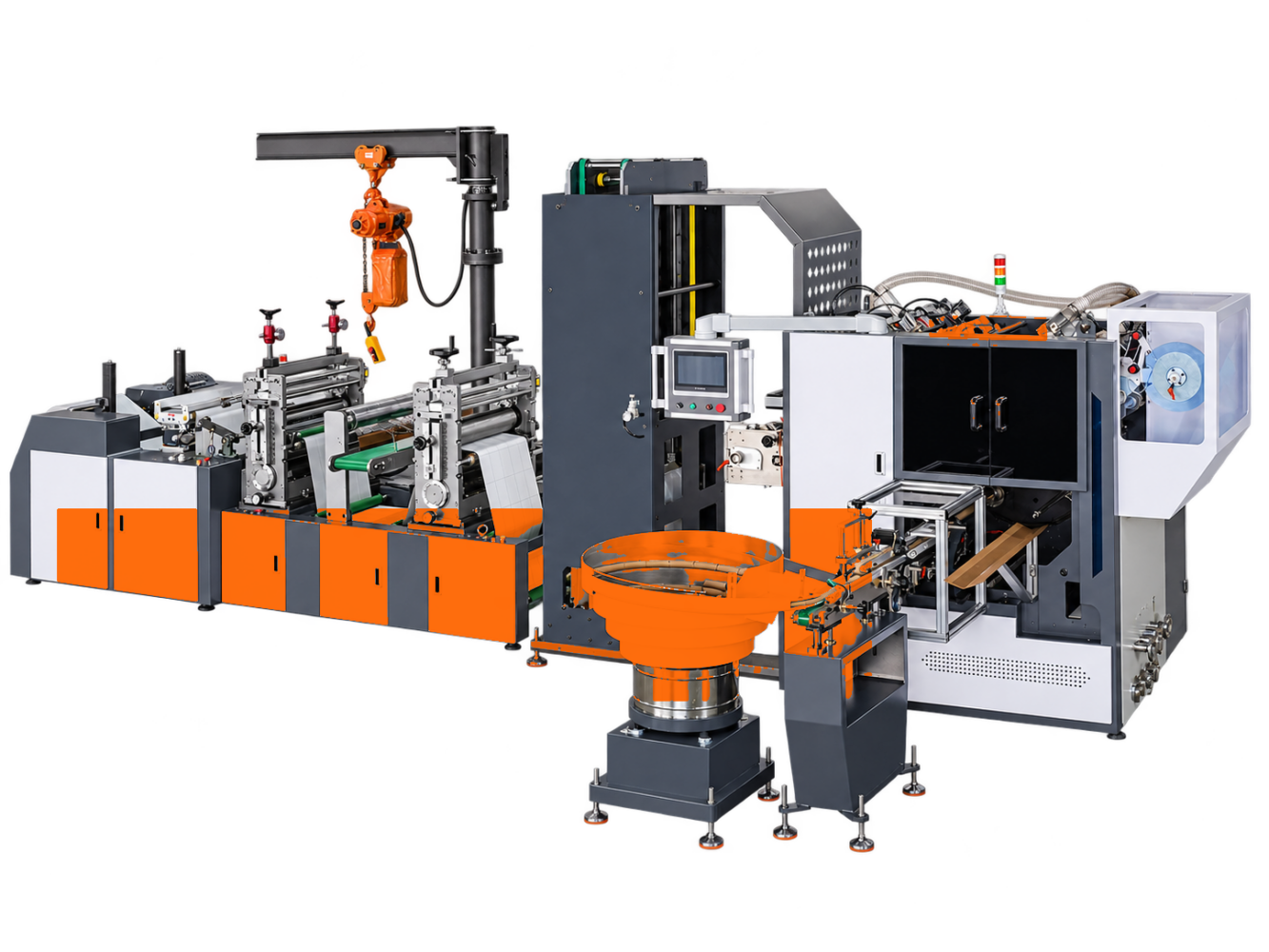
The PrintsPaul Viktor is available in web widths of 370 mm, 470 mm and 570 mm.
- Web width up to
- 570 mm
- Rental programme
- from Silver
What the Viktor can do
Less downtime. More saleable rolls per shift.
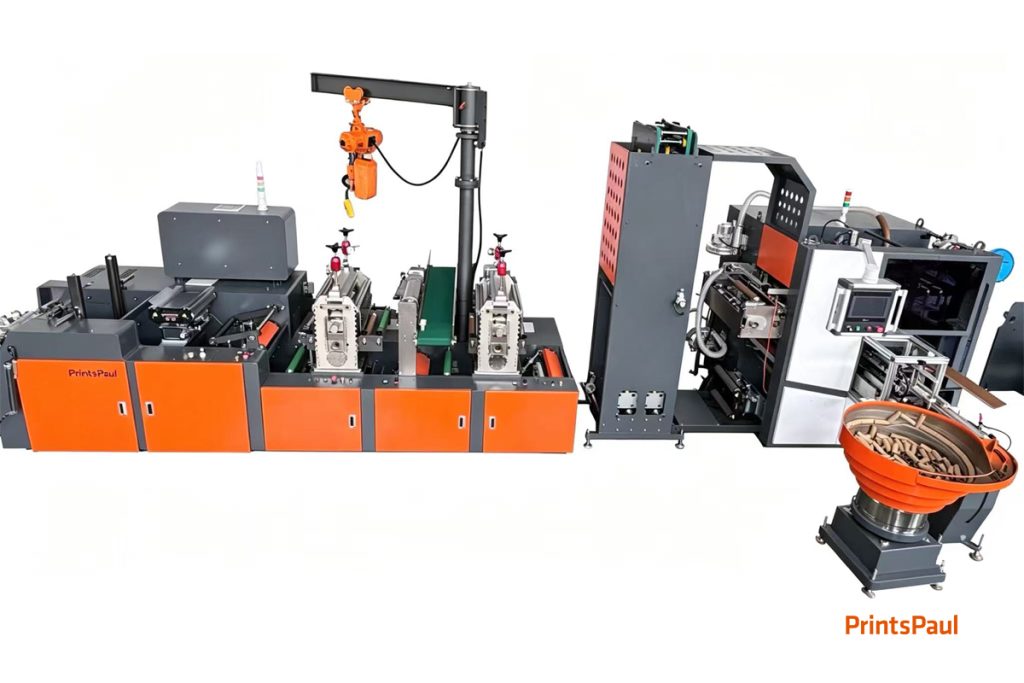
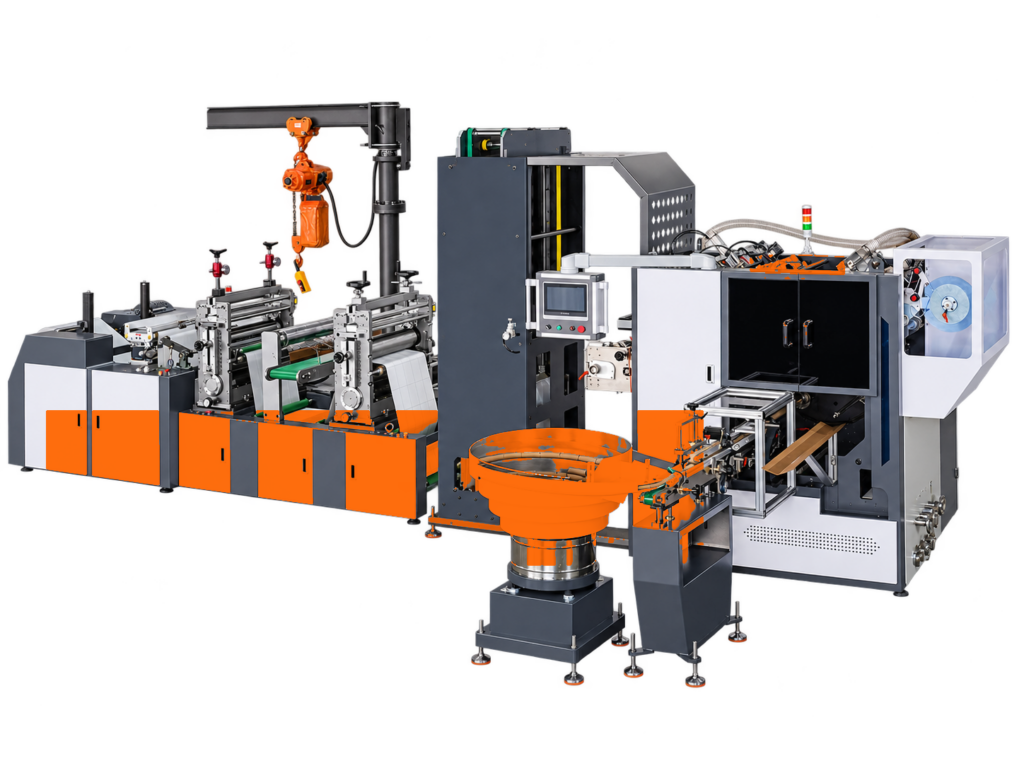
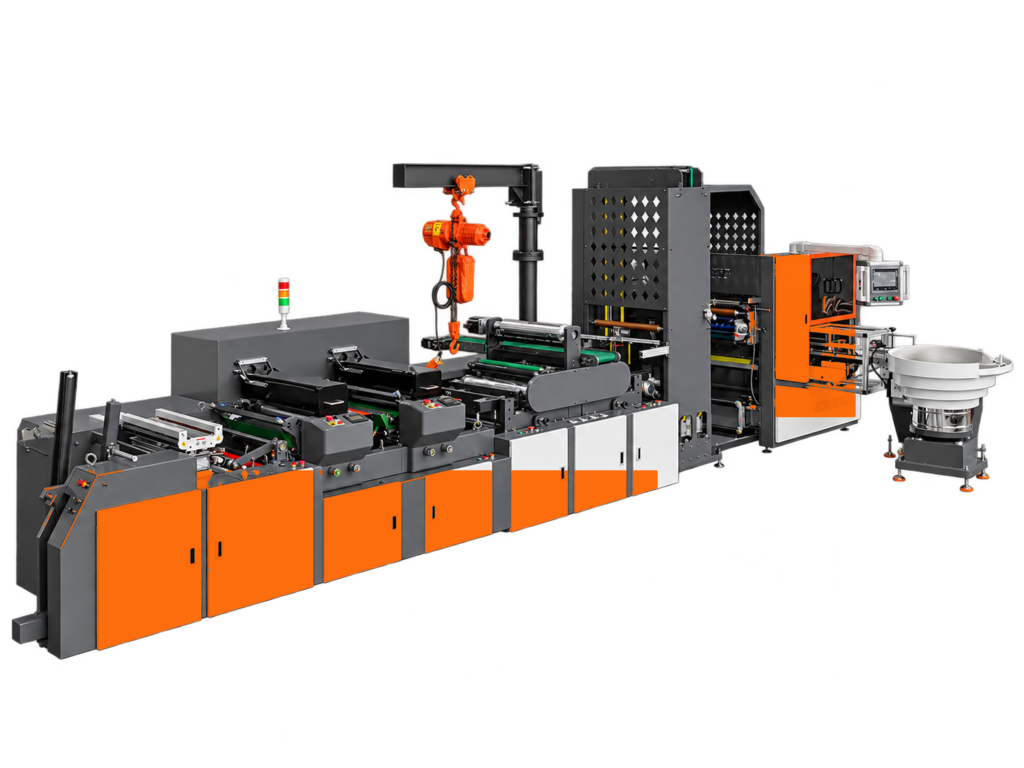
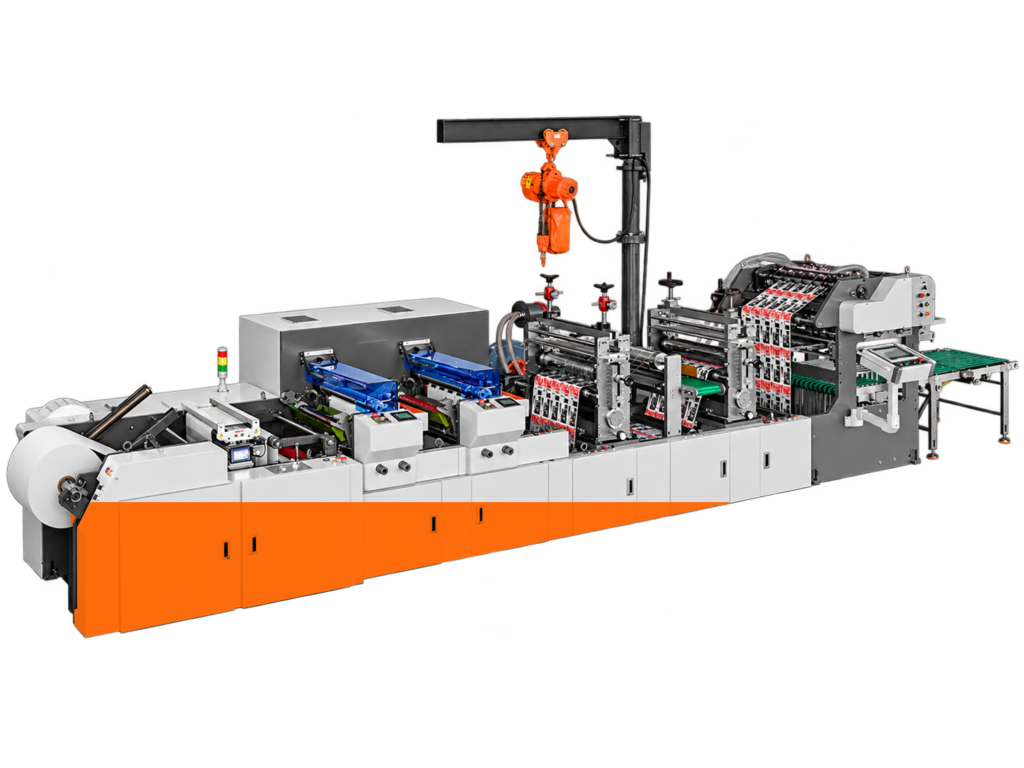
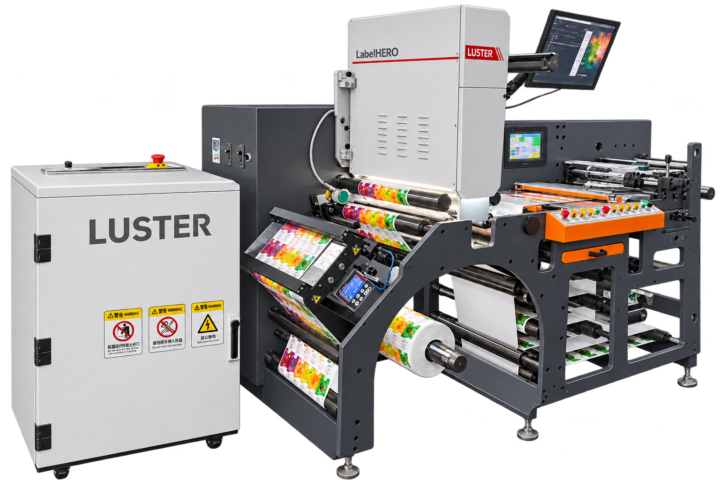
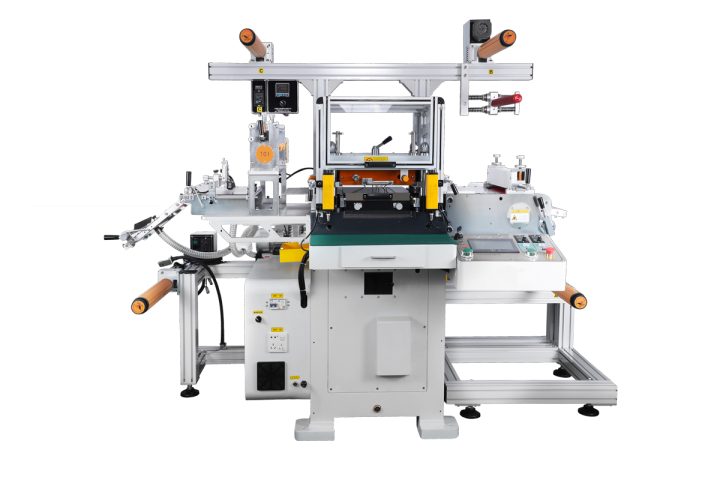
VIKTOR combines controlled jumbo-web feeding, die-cutting, buffering and automated finished-roll production. We configure the line for your material, run sizes and roll requirements as VIKTOR 370, 470 or 570.
The machine is the tool. We deliver the solution. We start with your bottleneck: time spent changing rolls, handling cores, changing tools or disposing of matrix waste. The resulting configuration is backed by an economic calculation using your production figures.
VIKTOR 370, 470 and 570: choose the appropriate width
-
VIKTOR 370: platform for webs up to 370 mm.
-
VIKTOR 470: platform for webs up to 470 mm.
-
VIKTOR 570: platform for webs up to 570 mm.
Individual modules may have a smaller usable working width. The detailed values below describe the quoted VIKTOR 370 configuration. Values and availability for 470/570 are defined in the individual quotation. Extensions are included only when selected; your ordered configuration determines delivery.
From jumbo roll to finished label roll
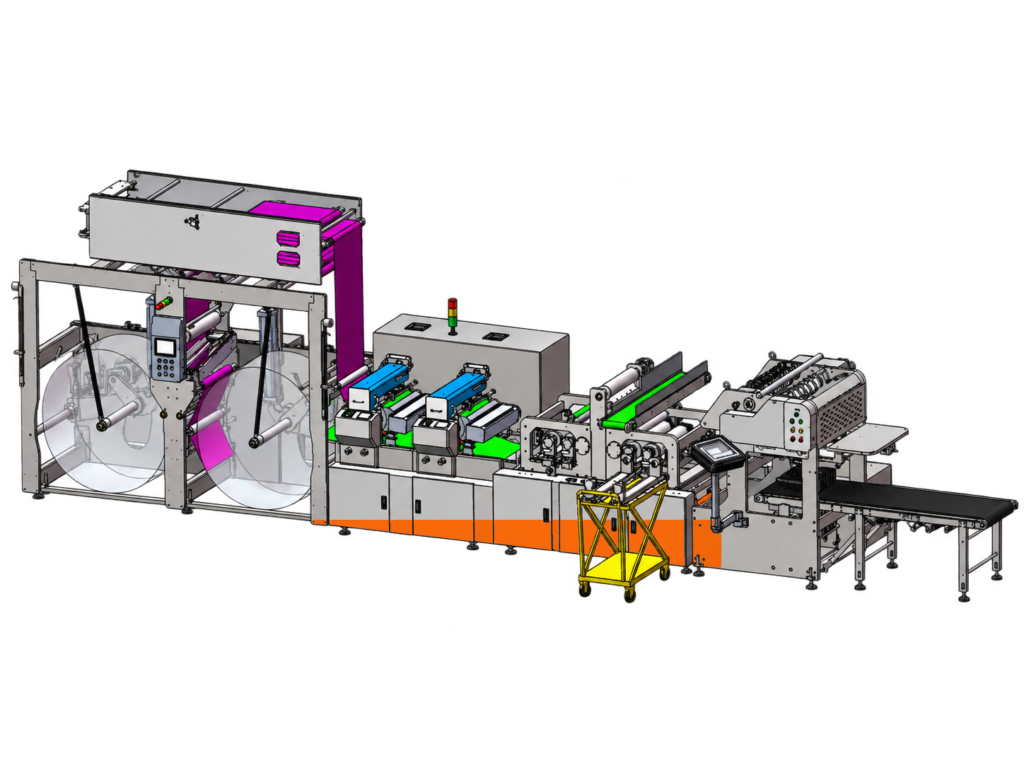
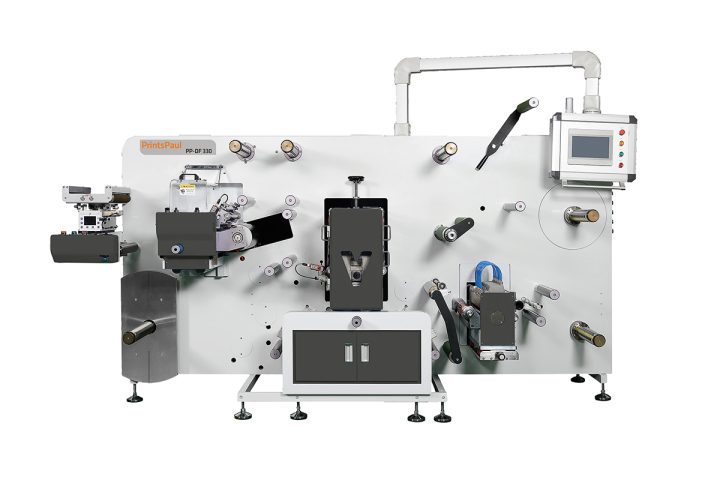
Servo jumbo unwinder
The unwinder accepts rolls up to 1,270 mm diameter, operates in both directions and combines automatic tension control with web guiding. Benefit: longer intervals between incoming-material changes and controlled feeding for consistent registration, die-cutting and slitting.
Optional dual nonstop unwinding
Two unwind positions allow the next roll to be prepared while the active roll runs. At roll end, the system automatically joins the outgoing web to the new web using a double-sided tape splice. The quoted execution is designed for a flying change during production; diameters and material suitability are agreed for the configuration.
Benefit: fewer infeed interruptions and manual interventions. Combined with the buffer and automated turret rewinder, it forms a coordinated nonstop concept at the input and output.
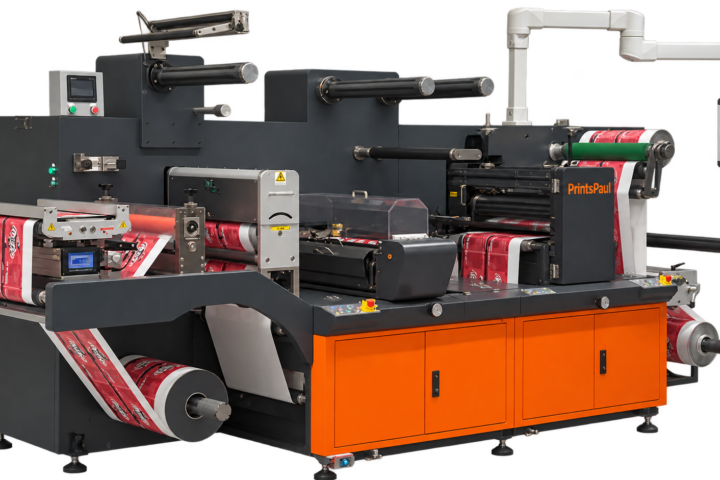
Full-rotary die-cutting with registration
The fully servo-controlled station processes blank and preprinted label webs. Print-mark control synchronises the die with the image. The described 370 configuration accepts suitable magnetic and solid cylinders from 80 to 180 teeth; the corresponding quoted module includes a 180-tooth cylinder. Die-cutting speed is up to 150 m/min, depending on material, tooling and job.
Benefit: continuous long-run production with controlled registration. Cylinder and tool selection follow your formats and materials.
Optional second die station
A second independently driven station adds synchronised die-cutting or perforating steps in the same line. Benefit: more complex label constructions with fewer separate passes, less handling and potentially shorter overall throughput time.
Optional semi-rotary mode
Different die lengths can run on the same suitable magnetic cylinder. The quoted range is 100 mm to 85% of cylinder circumference. Servos synchronise the cylinder with forward/reverse web motion and print registration. Switching to full rotary requires no mechanical conversion of the operating mode.
Benefit: fewer required magnetic cylinders and less setup effort for frequent format changes and shorter or medium runs. Semi-rotary speed is determined for the job.
Optional PrintsGAP
PrintsGAP adjusts the die/anvil gap over ±100 µm, a total of 200 µm, in approximately 0.5 µm steps. Both sides can be adjusted separately or together, including during production.
Benefit: tune cutting depth to substrate and liner to help avoid liner damage, incomplete cuts and waste. The adjustment resolution is not guaranteed die-cutting accuracy, and the module does not increase the approved speed of the whole line.
Integrated cylinder lifting crane
The integrated crane assists installation/removal of heavy magnetic or solid cylinders. Quoted lifting capacity is up to 250 kg. Benefit: reduced physical strain and controlled handling during tool changes.
Automatic matrix stripping
The servo stripper separates matrix from the label web. A steel stripping roller and regulated matrix tension support consistent removal and connection to downstream waste handling. Benefit: integrate waste removal into production; suitably combined shredding and compaction can eliminate conventional wound-matrix roll changes.
Optional matrix shredding and compaction
A conveyor continuously transfers stripped matrix to the shredding/compaction unit for subsequent disposal. Benefit: less manual waste handling and fewer interruptions for waste-roll changes. Actual handling and disposal arrangements are matched to your material.
Automated roll production: coordinated modules make the difference
Approximately 29-metre web buffer
The regulated buffer temporarily stores material between die-cutting and turret rewinding. Upstream die stations can continue while the turret slows or briefly stops for an automatic finished-roll change. The turret then accelerates to clear buffered material and restore the planned buffer position.
Benefit: die-cutting need not stop at every finished-roll change. The buffer decouples different motion cycles and supports steady production.
Shear slitting with semi-automatic knife positioning
Software positions the rear knives; the operator manually sets the front knives against their counterparts. Knife setup is therefore semi-automatic. Benefit: repeatable position settings ease format changes while manual engagement allows appropriate adjustment for cut quality and finished-roll width.
Four-spindle turret rewinder
The servo turret produces rolls up to 350 mm diameter. Dynamic web take-up reaches up to 250 m/min, particularly to clear the buffer. This is not the die-cutting speed or a blanket speed for the whole line.
Different turret positions can prepare/load cores, wind, cut the web in the label gap, close finished rolls and discharge them. Winding starts without glue using pressure contact. Available functions depend on selected automation.
Benefit: parallel rather than consecutive tasks reduce handling per set of rolls and support consistent output.
Spindles and cores for your finished rolls
Spindles are configured for core internal diameters. The technical reference lists 19, 25, 40 and 76 mm; other diameters can be assessed. Coreless winding is a special execution, with 12 and 19 mm internal diameters described in the turret offer. Minimum finished-roll width is approximately 27 mm, depending on execution and material.
Benefit: match the machine to customers‘ roll formats. Core internal diameter and finished-roll diameter are separate specifications.
Optional automatic core feeding and positioning
A vibratory hopper separates cores and transfers them to the feeder. The system loads and positions cores on the spindles for the required roll widths, including multiple cores along one spindle.
Benefit: less repetitive manual loading and alignment, freeing operators to focus on material, quality and production monitoring.
Optional automatic roll closure and labelling
An integrated labeller supplies closure labels. A vacuum conveyor transfers and positions them to close multiple finished rolls; spacing follows roll widths and the closing position can be adjusted during operation.
Benefit: repeatable closure with less downstream handwork and no individual manual closure-label application in the automated process.
Optional printing, curing and folding
Gearless flexo with three servo drives
Three independently regulated servos drive impression cylinder, plate cylinder and anilox roller. Electronic synchronisation replaces mechanical gear coupling. Side-change sleeves permit variable repeats within the permitted design range without fixed tooth increments.
The quoted 370 execution specifies 360 mm processing width, material-dependent printing up to 150 m/min, 1.14 or 1.70 mm plates, 0.38 mm mounting tape and 100–1,000 LPI anilox rollers. Curing is separately configured.
Benefit: integrate printing and varnishing into converting. Sleeve changes and electronic registration support flexible jobs without dependence on fixed gear increments.
UV or UV-LED curing
The curing unit follows the optional flexo and is synchronised with production speed. Select conventional UV or UV-LED for the ink, varnish and substrate. Processing width is up to 360 mm for the described 370 execution; wavelength, cooling and power depend on the selected system.
Benefit: cure suitable media inline for subsequent processing. An appropriate LED system can reduce thermal load and energy demand compared with a conventional UV execution. Media compatibility is checked for the application.
Z-FOLD fanfold labels
The optional unit forms uniform, stackable zigzag packs. The quoted 370 module specifies up to 360 mm working width, 130–350 mm fold length and 80–300 mm stack height. Feed and folding are electronically synchronised; speed depends on material and fold geometry.
Benefit: add fanfold packs for logistics, barcode and industrial continuous labels. Automatic stacking reduces manual delivery and eases subsequent handling.
Which configuration pays for your production?
-
Long runs: jumbo unwind, continuous die-cutting and controlled feeding.
-
Many small finished rolls: buffer, four-spindle turret, automatic cores and closure.
-
Frequent format changes: semi-rotary mode, PrintsGAP and semi-automatic slitting setup.
-
High waste-handling effort: stripping with shredding/compaction.
-
Extra added value: flexo, UV/UV-LED or Z-FOLD for your product range.
-
Coordinated roll changes: dual nonstop unwind with buffer and automated rewinding.
ROI and economic assessment using your figures
What does your present bottleneck cost per shift? We compare current production with the planned VIKTOR configuration using job mix, annual hours, roll changes, roll sizes, setup, operator effort, material losses, maintenance, energy and realistically saleable extra capacity.
-
Time gain: minutes saved per change × changes per day × production days per year ÷ 60.
-
Material benefit: annual avoided waste × actual material cost.
-
Annual net benefit: achievable cost savings plus additional contribution after variable costs, less additional operating, maintenance and financing costs.
-
Simple payback: total investment including agreed ancillary services ÷ positive annual net benefit; multiply years by 12 for months.
-
Annual ROI: annual net benefit ÷ total investment × 100%.
Illustrative assumption: saving three minutes on a task repeated 20 times daily on 220 days releases 220 hours/year. This is an example, not guaranteed VIKTOR savings. Whether it becomes lower cost or additional saleable production is assessed together; operator time and machine downtime are not double-counted.
Request your individual VIKTOR economic calculation. Bring current changeover/setup effort and representative jobs so the configuration can be judged against your own production.
Installation and operator training
On request, we coordinate transport, positioning and commissioning, connect ordered modules, set web handling/control and test functions with suitable customer material. Site, access, unloading/lifting and utility connections are agreed beforehand.
The separately offered operator training covers two working days in the master configuration: job setup, die-cutting, winding, installed automation, tension, common operating errors, daily checks and basic maintenance. Benefit: practical training on the delivered equipment supports an orderly start and safe use.
Test in your production: RENT–TEST–BUY@PAUL
For suitable projects within the EU, VIKTOR is available under the agreed RENT–TEST–BUY programme. Test the selected configuration under real operating conditions before deciding on purchase. Rental period, deposit and purchase credit follow the selected programme and contract.
The machine is the tool. We deliver the solution. Request your VIKTOR configuration, material test and ROI assessment.
The Viktor in operation
Non-binding consultation on the Viktor?
Free of charge and without obligation. On request with a test on your material.
Tell us what you would like to produce. We will get back to you within one working day.